


What is the Day of the Dead?
The Day of the Dead is one of Mexico's most important and renowned celebrations. Each year, on November 1 and 2, families across the country honor the memory of their deceased loved ones with altars, offerings, flowers, and handicrafts. It's a moment when time pauses to allow us to embrace those who are no longer on this earthly plane, and in every corner of Mexico, nostalgia transforms into a celebration of color, community, and remembrance.
In 2008, UNESCO declared the Mexican Day of the Dead an Intangible Cultural Heritage of Humanity, recognizing its profound symbolic value and its living continuity within Mexico's Indigenous and mestizo communities.
The altar of the Dead: symbolic architecture
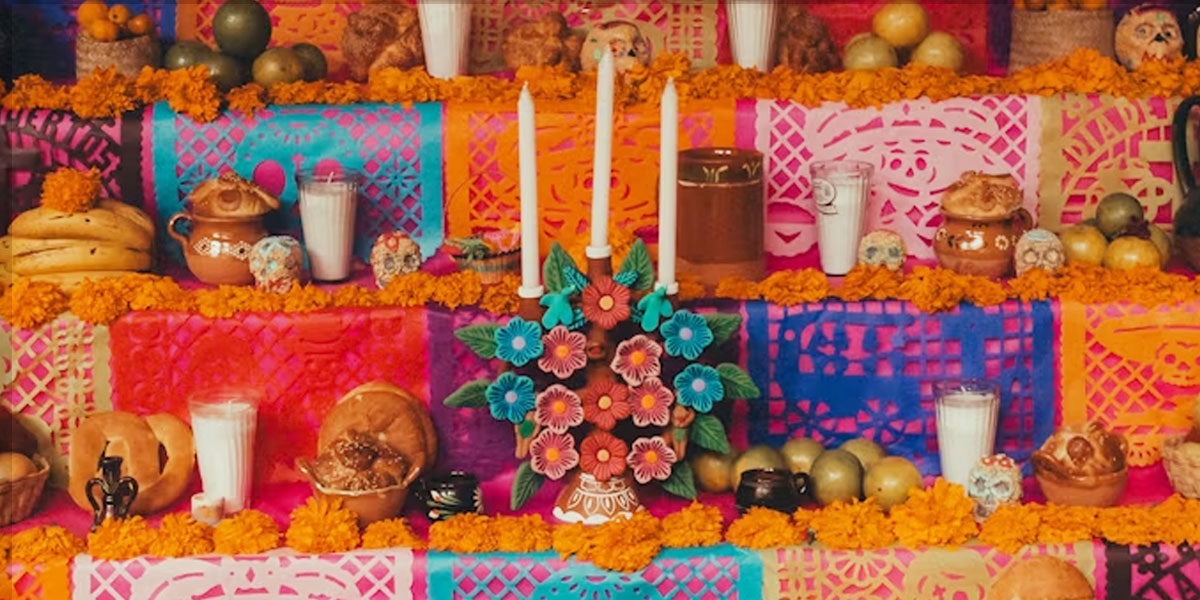
The altar, also known as an "ofrenda" (offering), is the heart of the celebration. It's not merely a decoration; it is a sacred space carefully constructed to welcome the deceased during their annual visit to the world of the living. Its purpose is to guide souls back home to enjoy the essence of the foods, flowers, and objects they loved in life. Each level of the altar represents the realms of existence (the underworld, the earth, and the heavens), and every element holds a specific meaning:
- The tiers: The traditional altar has two or three tiers. Two tiers represent heaven and earth; three tiers represent heaven, purgatory, and earth. Some elaborate altars feature up to seven tiers, representing the various stages the soul must traverse to reach eternal rest.
- The embroidered cloth: This covers the base of the altar and welcomes the soul; it is typically a handcrafted, hand-embroidered piece.
- The photograph of the deceased: This occupies the central spot on the altar, serving as a focal point and establishing identity.
- Water: Used to quench the soul's thirst after its long journey.
- Salt: A symbol of purification.
- Fire: Represented by candles and votive lights, it illuminates the soul's path back home.
- Copal: A sacred incense whose smoke guides the soul and purifies the space.
- Cempasúchitl flowers: It is the Day of the Dead flower par excellence. Its intense orange color and penetrating aroma serve as an olfactory and visual guide for souls.
Devotion turned into art: Day of the Dead handicrafts
The pieces that make up the "ofrenda" (offering) maintain a symbolic balance among the four elements of nature; each plays a specific role in the celebration and is brought to life through the craftsmanship of various regions:
- Papel picado (air): The colorful strips of "papel picado" (cut paper) that decorate the altars are a craft in their own right. Meticulously created by hand-chiseling sheets of tissue paper, their intricate cutouts represent the fragility of life; they symbolize the wind, and when the breeze stirs the paper, it confirms that the souls have arrived.
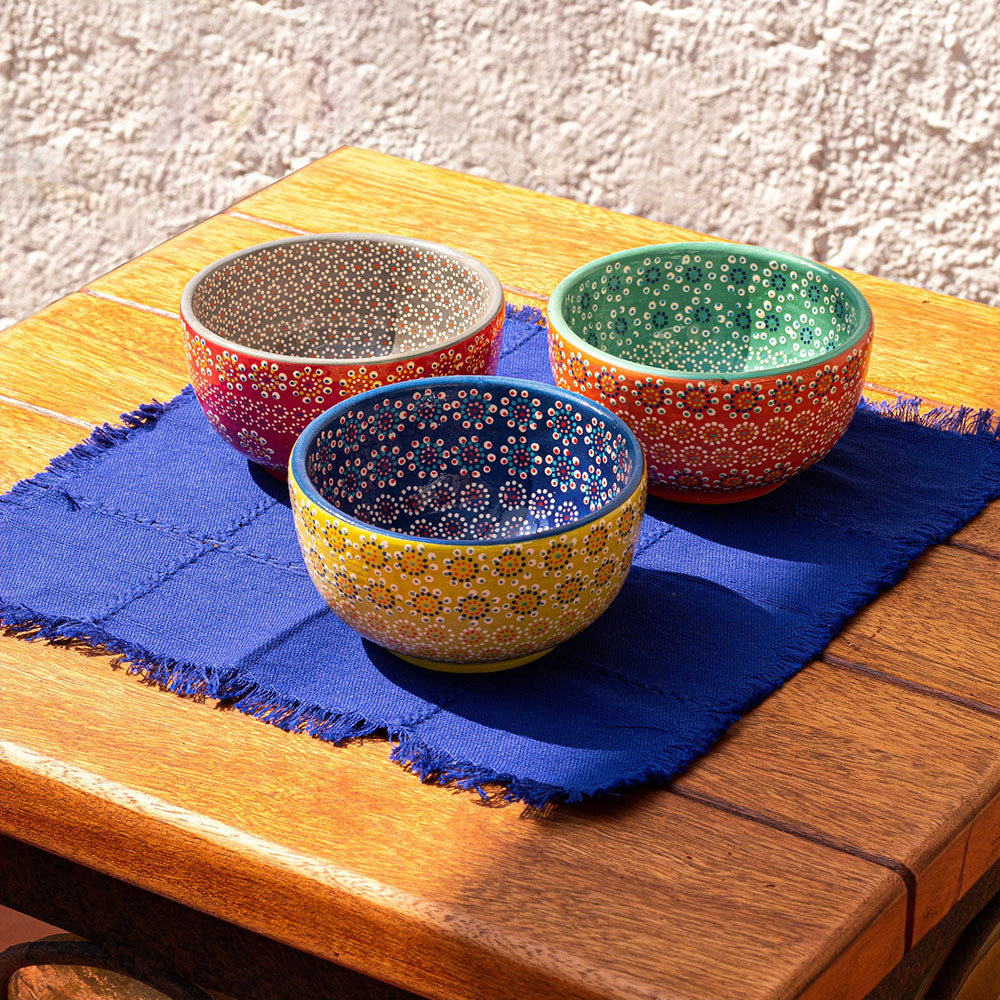
- Clay and ceramics (the earth): From clay incense burners and "saumerios" to ceramic or Talavera Poblana plates, these are fundamental elements of the altar; the incense burners and "saumerios" are used to burn copal, while the ceramic or Talavera Poblana plates hold the food offerings. These pieces are typically crafted in the same pottery-making communities that produce other ritual ceramics. Traditional pottery directly connects the offering to the earth that nourishes us.
- Skulls made of sugar, clay, or papier-mâché (acceptance): These are the most recognized symbol of the Day of the Dead, the Mexican perspective that smiles in the face of mortality. Crafted from clay, papier-mâché, sugar, or chocolate, they represent death in a festive, fearless manner, reminding us that it, too, has a sweet side. Artisanal clay skulls, especially those from Oaxaca and Michoacán, are highly prized collector's items due to their intricate detail and vibrant colors.
- Sculpted wax (fire): Large candles and tapers, often adorned with wax flowers handmade by traditional artisans, serve as beacons of light guiding the souls on their journey.
- Tree of Life: This is one of the most complex and iconic handcrafted pieces associated with the Day of the Dead. Originating in Metepec, State of Mexico, it is a clay sculpture adorned with figures of angels, flowers, animals, and scenes of paradise; during the Day of the Dead season, skulls and other symbolic elements of the celebration are incorporated into the design.
- Embroidered textiles: Hand-embroidered tablecloths, napkins, and table runners are essential to the altar's presentation. Otomi embroidery from Hidalgo and Zapotec textiles from Oaxaca are particularly prized for their designs, which are rich in symbolic meaning.
- Cempasúchil flowers: Although not a craft in itself, it inspires the floral motifs found in the season's textiles, embroidery, and ceramics.
How to create an authentic altar in your home
The "altar de muertos" transcends a mere offering; it is a sacred canvas where pre-Hispanic worldview and colonial-era syncretism come to life through the hands of master artisans. If you wish to honor this tradition in your home, here are the essential elements that must be included:
- A photo of the loved one you wish to remember.
- A glass of water.
- Candles (at least four, representing the cardinal directions).
- Cempasúchitl flowers or fresh flowers.
The deceased's favorite food and drink. - Colorful "papel picado" (cut-paper decorations).
- Copal or incense.
- A handcrafted item representing the tradition: a clay skull, a Tree of Life, an embroidered textile, or a Catrina figure.
Day of the Dead handicrafts at Tikal Arte Mexicano
At Tikal Arte Mexicano, you will find a selection of traditional Day of the Dead handicrafts, such as clay skulls, Trees of Life, ceramic pieces, and embroidered textiles, all crafted by artisans from communities where these traditions remain alive.
For us, as promoters of Mexican folk art, this tradition represents the pinnacle of our country's artisanal spirit.